
Why Does a Concrete Pump Hydraulic S-Valve Jam, and How to Fix It?
An industrial troubleshooting manual detailing why concrete pump rock-valves fail to switch over and how to calibrate hydraulic accumulator circuits.

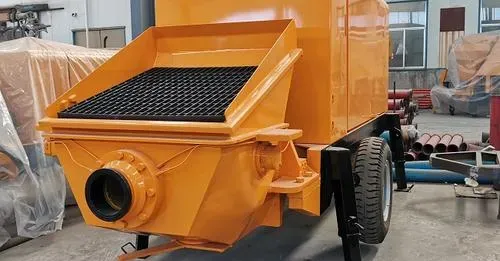
Metrological Overview & Hydraulic Shifting Dynamics
In heavy structural civil engineering projects, the mechanical operational runtime of a concrete pump is dictated by the continuous, alternating stroke pattern of its twin-cylinder hydraulic pumping system. Driven by high-displacement axial piston hydraulic pumps (typically running up to 32.0 MPa or 320 bar), dual material cylinders pull wet concrete mix from the receiving hopper and force it into the delivery pipeline under intense pressures.
To bridge the alternating cycles smoothly, a heavy-duty, cast-alloy shifting valve—commonly engineered as an S-Valve or Rock-Valve system—swings back and forth between the two material cylinder ports at precise sub-second intervals.
Because the concrete mixture consists of high-abrasion crushed quartz aggregate, fine sand, and alkaline Portland cement slurry, the shifting valve interface operates under severe wear parameters. A spring-loaded cutting ring and a matching spectacle wear plate form a tight mechanical seal inside the hopper.
If this seal loses its factory clearance boundaries, or if the independent hydraulic accumulator circuit suffers fluid starvation, the shifting valve fails to seal. Aggregate slips beneath the moving surfaces, causing immediate mechanical jams, pressure drops, and rapid destruction of the main hydraulic pump.
This field service operations manual isolates the fluid and mechanical root causes of concrete pump shifting failures, establishes strict pressure metrics, and outlines a structured checklist to troubleshoot and remediate S-valve blockages.
The 3 Primary Root Causes of Shifting Valve Failures
When the operator's remote radio control panel logs a shifting timeout alarm, or the hydraulic system spikes to maximum relief pressure without switching over the valve, maintenance crews must isolate three independent variables.

1. Spectacle Plate and Cutting Ring Gap Expansion (Slurry Bypass)
The cutting ring must maintain continuous physical contact with the stationary spectacle wear plate. As abrasive fine sand grains grind between these elements, the metal edges wear down.
- The Clearance Trap: Once the physical gap between the cutting ring and the wear plate exceeds 2.0 mm, the dynamic sealing force is lost. During a high-pressure pumping stroke (exceeding 8.0 MPa concrete pressure), fine cement slurry slips through the gap and packs into the cavity behind the S-valve. This stone-hard cake mechanically blocks the valve's swing arc, trapping it mid-stroke.
2. Shifting Accumulator Pressure Starvation (Gas Volatilization)
The rapid, sub-second shifting of the S-valve is powered by dual hydraulic switching cylinders that draw high-velocity fluid directly from a bladder-type accumulator.
- The Loss of Elasticity: Over multi-shift construction schedules, the compressed Nitrogen ($N_2$) gas pre-charge inside the rubber accumulator bladder naturally permeates out through the gas valve. If the pre-charge drops below 8.0 MPa, the accumulator loses its energy buffer. While the main hydraulic system displays proper static pressure, the dynamic fluid flow rate drops during a shift command, causing the S-valve to move sluggishly or fail to complete its swing against a stiff concrete mix.
3. Concrete Material Segregation & Hopper Grout Caking
- The Compaction Factor: If the concrete mix sits idle inside the receiving hopper for more than 20 minutes without continuous agitation, the aggregate separates from the water line and sinks to the bottom. This creates a dense rock pocket directly beneath the S-valve body. When the hydraulic cylinders attempt to shift the valve, the arm slams into an un-pumpable mass of dry rock, triggering a structural block that can twist or shear the internal spline drive shaft.
Technical Specifications & Shifting Fluid Boundaries
The metrological fluid specification matrix below outlines the strict physical parameters and hydraulic limits required to stabilize a heavy structural concrete pump configuration.
| Operational Parameter / Siting Node | Standard Target Parameter | Critical Fault / Failure Threshold | Precision Diagnostics Device |
|---|---|---|---|
| Main Pumping Loop Hydraulic Pressure | 28.0 MPa to 32.0 MPa (280-320 bar) | > 34.5 MPa (Main Relief Valve Blow-off) | Glycerin-Damped Line Gauge |
| S-Valve Shifting Accumulator Pressure | 15.0 MPa to 18.0 MPa (150-180 bar) | < 12.0 MPa (Sluggish Shifting Fault) | Inline Electronic Transducer |
| Accumulator $N_2$ Gas Pre-Charge | 8.5 MPa to 10.0 MPa (85-100 bar) | < 6.5 MPa (Total Energy Loss) | Gas Charging Kit with Tester |
| Cutting-Ring-to-Wear-Plate Gap | 0.5 mm to 1.0 mm | > 2.0 mm (Immediate Slurry Bypass) | Carbon Steel Metric Feeler Gauge |
| Hydraulic Fluid Operating Temp | 45°C to 55°C (Optimal Range) | > 70°C (Viscosity Thinning / Scored Seal) | Inline PT100 Thermal Sensor |
Step-by-Step S-Valve Alignment & Remediation Sequence
If the concrete pump locks down mid-pour due to an S-valve switching error, maintenance crews must execute this structural diagnostic path immediately:
Step 1: Execute Complete Depressurization and Safety Isolation
- Disengage the diesel engine Power Take-Off (PTO) system and hit the emergency stop button on the operator panel.
- Head to the hydraulic manifold block. Locate the manual pressure relief needle valve for the accumulator circuit and open it slowly. Verify that the accumulator gauge drops to absolute zero (
0.0 MPa) before putting hands or tools inside the hopper. - Secure the high-pressure pipeline with safety slings and enforce strict Lockout-Tagout (LOTO) procedures on the engine starter keys.
Step 2: Clear Internal Aggregate Jams and Adjust the Tension Nut
If the S-valve is jammed mid-stroke by stone packings:
- Open the rear discharge clean-out door at the bottom of the hopper. Flush out all caked aggregate and cement slurry using a high-pressure wash-down hose.
- Locate the main thrust axis tension nut on the outer rear wall of the hopper housing.
- Engineering Correction: If the cutting ring has worn down, tighten the heavy rear housing tension nut using a specialized slugging wrench. This draws the entire S-valve shaft rearward, compressing the internal polyurethane spring washers and forcing the cutting ring flush against the spectacle wear plate to reset the clearance gap back to 0.5 mm.
Step 3: Test and Recharge the Nitrogen Accumulator
If the S-valve shifts slowly even after removing caked aggregate from the hopper:
- Ensure the accumulator fluid line is fully depressurized.
- Remove the protective steel valve cap from the top of the accumulator shell.
- Attach a dedicated gas charging manifold with an accurate analog test gauge. Read the static nitrogen pressure.
- If the gauge reads below 7.0 MPa, attach a high-pressure commercial Nitrogen gas cylinder to the charging kit.
- Slowly open the valve to charge the internal rubber bladder until the pressure settles at 9.0 MPa (90 bar) at 20°C ambient temperature. Warning: Never use oxygen or standard shop air to charge the bladder; mixing compressed oxygen with standard petroleum hydraulic oil causes a catastrophic diesel-effect internal explosion.

FAQ
Q1: Why should a procurement manager specify tungsten-carbide hardfaced components instead of standard alloy steel for spectacle wear plates?
A1: Sourcing directors must prioritize material metallurgy when finalizing a concrete pump replacement parts contract. Standard hardened tool-steel spectacle plates carry a lower initial purchase CAPEX (saving up to 50%), but they experience rapid edge rounding when processing harsh aggregate mixes containing crushed granite or quartz sand. Mandating spectrade plates and cutting rings outfitted with an integrated, robotically applied Tungsten-Carbide (WC) hardfaced inlay (pushing hardness over 70 HRC) extends component operating life by up to 400%. This upgrade changes your wear-parts replacement window from 15,000 m³ to past 60,000 m³, drastically slashing ongoing site maintenance OPEX and preventing mid-pour breakdown penalties.
Q2: How does an automatic synchronous grease distribution manifold optimize the operating lifecycle of an S-valve drive shaft?A2: The outer spline drive shaft and outer slewing bearings of an S-valve operate submerged in highly alkaline cement slurry inside the hopper. Manual greasing setups rely completely on operator labor and often lead to under-greasing errors, allowing fine aggregate dust to migrate past basic rubber lip seals and grind into the bronze bushings. Mandating an automated progressive central lubrication pump (operating at 20-30 MPa) delivers a metered, continuous dose of fresh EP2 lithium grease directly into the shaft seals at every single stroke change. This continuous positive grease pressure pushes out sand particles before they can score the steel journals, reducing unplanned mechanical shaft seizures by 90% and optimizing long-term ROI.
TAG
concrete boom pump,concrete pump hydraulic s valve troubleshooting,why concrete pump rock valve jams mid stroke,tungsten carbide spectacle wear plate price,concrete pump accumulator nitrogen charging specifications,heavy duty concrete boom pump parts suppliers,concrete pump,concrete boom pump suppliers
Request Technical Blueprints & Factory Quotes
Submit your machinery parameters below. Connect directly with verified, certified heavy industrial manufacturers to receive custom foundation drawings, layout schematics, and direct-from-factory pricing.